All about tooth decay
What are cavities, why do they form, what types are there, how can they be prevented and how do you get rid of them?
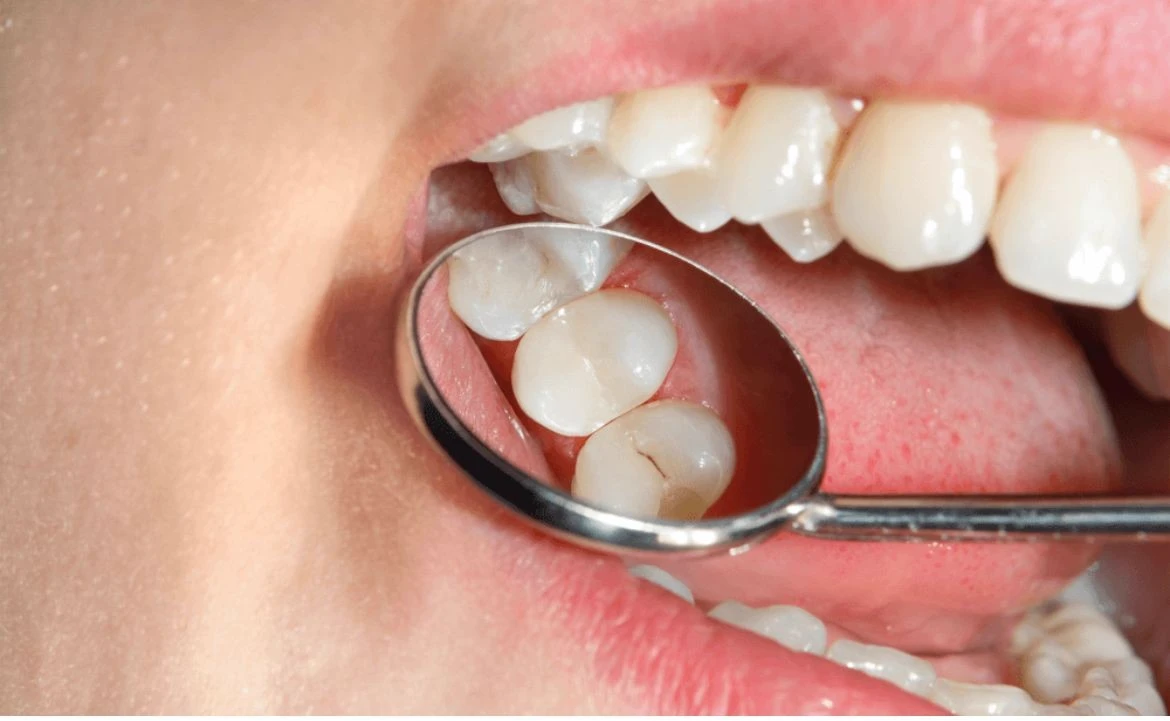
Tooth decay is one of the most common conditions of the mouth: together with periodontal disease, it is one of the main causes of tooth loss in Romania. Tooth decay does not go away on its own and, if left untreated or treated improperly, it can progress quickly and damage the structure of the natural tooth.
Although treating tooth decay at an early stage is a simple procedure, patients often only seek help from a dentist once the condition is causing unbearable pain. But what are cavities, why do they form, what types are there, how can they be prevented and how do you get rid of them? We answer these questions simply and clearly in this article:
Tooth decay – what is it, why does it happen and what types are there?
Tooth decay is the destruction of the hard tissue of the tooth, and whether it develops is influenced by the patient's lifestyle. What we eat, how and how often we look after our teeth, which toothpaste we use and so on all matter a great deal.
Tooth decay is the destruction of the hard tissue of the tooth, and whether it develops is influenced by the patient's lifestyle. What we eat, how and how often we look after our teeth, which toothpaste we use and so on all matter a great deal.
At first, decay causes no symptoms, but as it progresses it leads to various problems such as bad breath, hypersensitivity and pain. It should not be underestimated, as it can even lead to the loss of the tooth.
There are several ways of classifying tooth decay, and one of the most widely used is by severity:
- Early decay: there is no damage inside the tooth; this is the first stage, in which decay appears as a whitish spot on the surface of the enamel;
- Superficial decay: the damage caused by decay has created a cavity affecting the first layer beneath the enamel, the dentine;
- Moderate decay: there is a more or less deep cavity affecting most of the tooth;
- Deep decay: the decay has penetrated deep into the tooth, attacking the dental pulp, also known as “the nerve of the tooth”. Infection of the dental pulp causes the pain felt once tooth decay reaches an advanced stage. At this stage, the patient may need root canal treatment.
How can you prevent tooth decay?
To prevent tooth decay, the most important thing you can do is pay close attention to your oral hygiene. Dentists recommend brushing at least twice a day, morning and evening. You should also complete your oral hygiene routine with mouthwash, dental floss and a water flosser, to remove all food debris and bacteria from areas that are hard for a toothbrush to reach.
Last but not least, the most important thing you can do to prevent tooth decay is to see your dentist regularly for check-ups and professional cleaning. This can help detect cavities early and treat them before they become painful. It is also advisable to avoid tobacco and to avoid injuries to your teeth. And don't forget to eat a healthy diet. It is best to avoid sugary foods, as sugar can contribute to tooth decay.
How do you get rid of tooth decay? How is tooth decay treated in adults and children?
The tissues that teeth are made of cannot regenerate themselves. That is why, to get rid of tooth decay, you need to see a dentist. The treatment carried out depends on the type of decay and the stage it has reached.
The first thing the dentist will certainly do is check where the decay is located and the general condition of the affected teeth, so in most cases a dental X-ray is needed.
At Dental Studio Dr. Leuștean, our dentists' main aim is always to try to save your natural tooth by removing the necrotic parts. A filling is therefore the most commonly used method. It involves treating the lesion, removing the decayed part and filling the cavity with the appropriate material. If needed, local anaesthetic can be used for fillings so that the patient feels no pain or discomfort.
If a large part of the outer tooth surface is compromised, a new crown is needed to replace the natural one. Where decay has penetrated deep and attacked the dental pulp, however, root canal treatment is needed. These treatments are carried out for both adults and children.
Look after your oral health!
If you have constant toothache, see a dentist. At Dental Studio Dr. Leuștean you will find the best dental professionals to take care of your smile! We have modern equipment and technology to carry out every type of treatment you need.
Treating cavities under the microscope
At Dental Studio Dr. Leuștean, tooth decay can be treated using a dental microscope. This offers important benefits for patients, including greater precision in identifying and removing decay, shorter treatment time and less pain for patients during the procedure.
The microscope allows the dentist to see the decayed area with much greater accuracy, which reduces the chance of overlooking any problem and ensures that the whole affected area is properly cleaned. This means patients receive more precise and more effective treatment.
In addition, using the microscope allows the dentist to work with greater precision and remove only the affected part of the tooth, without damaging healthy areas. This can significantly shorten treatment time, allowing the patient to return to their usual activities more quickly.
Do you have a cavity?
Book an appointment: 0723166180
We are in Cotroceni, str. Victor Poloni nr.3
Lasă-ne un comentariu