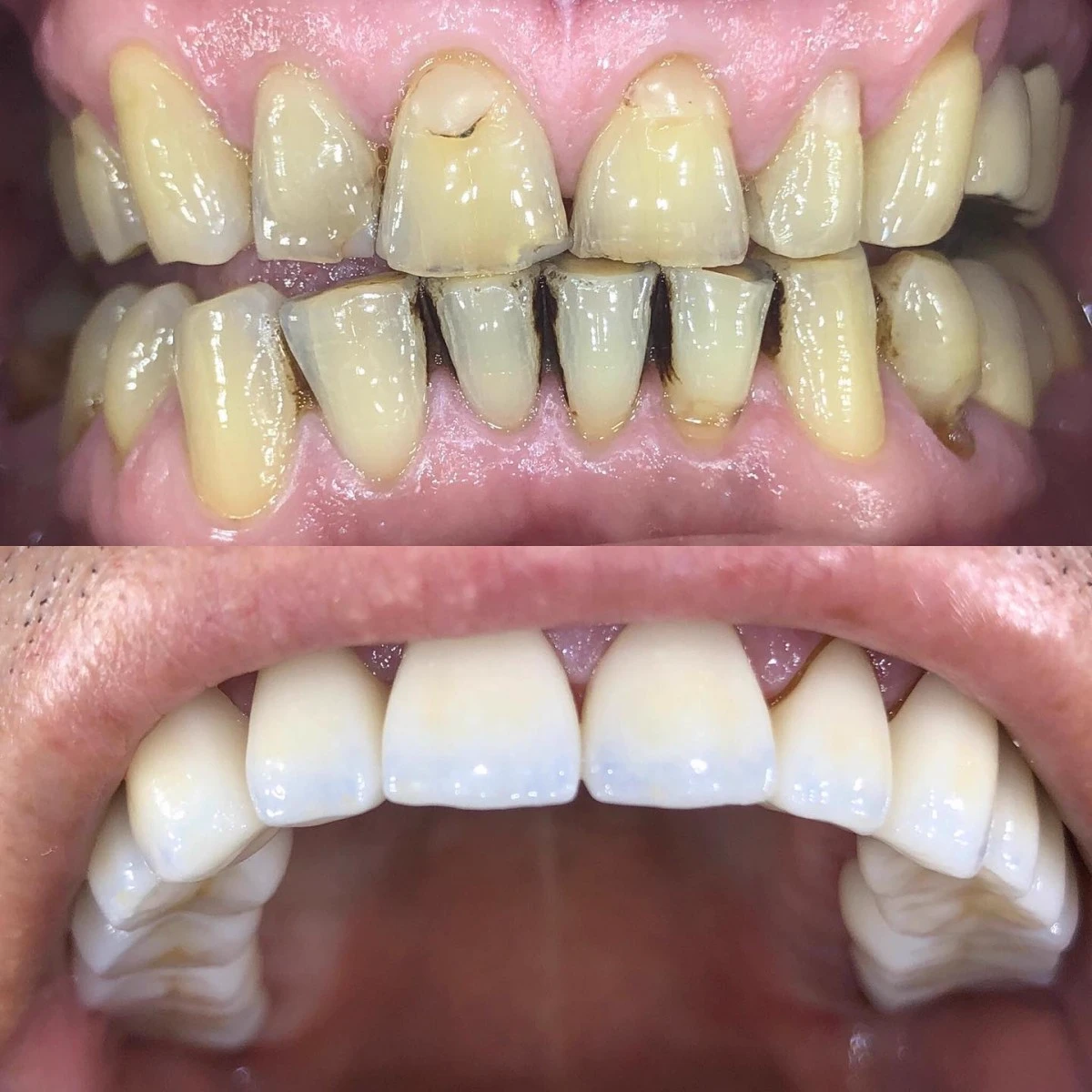
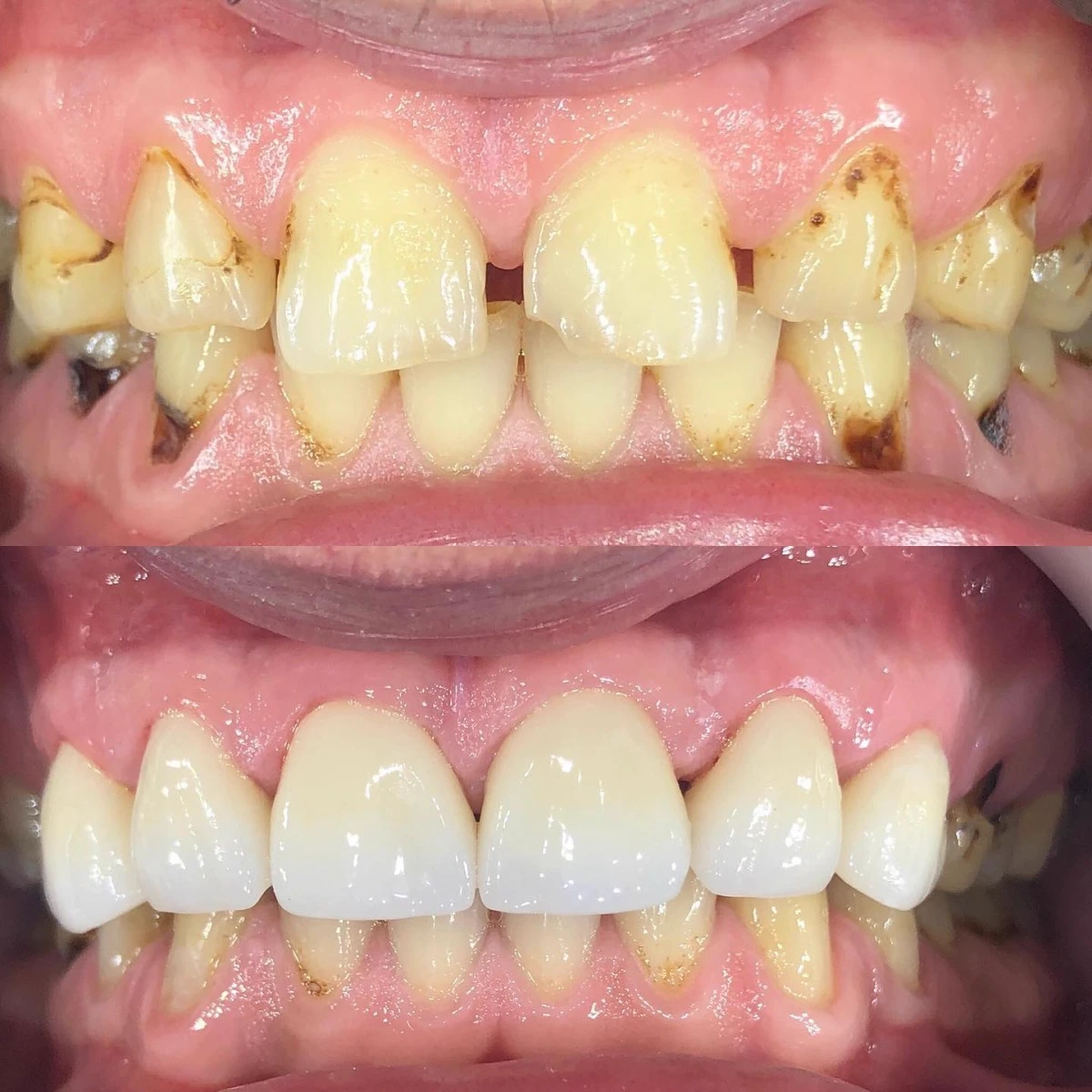
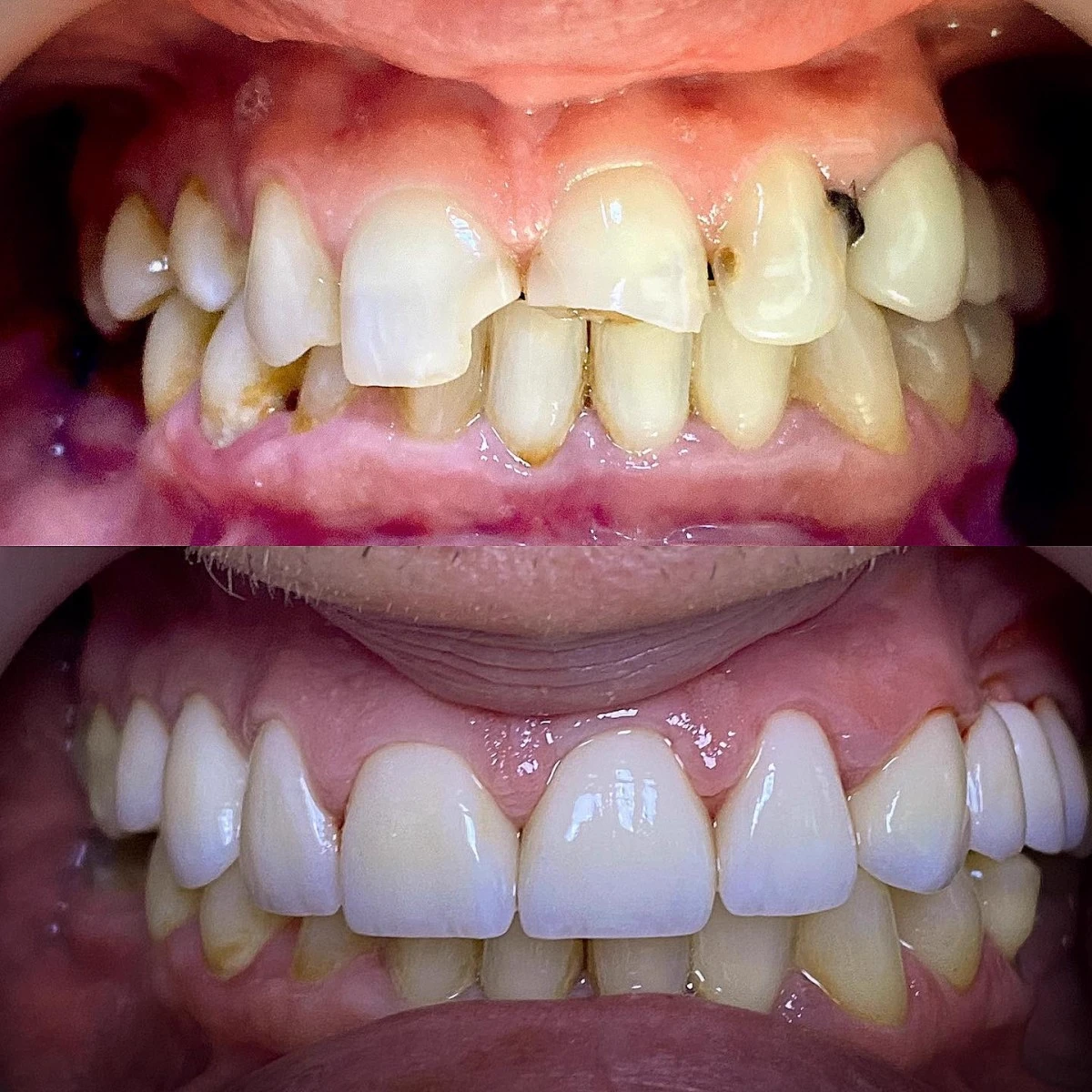
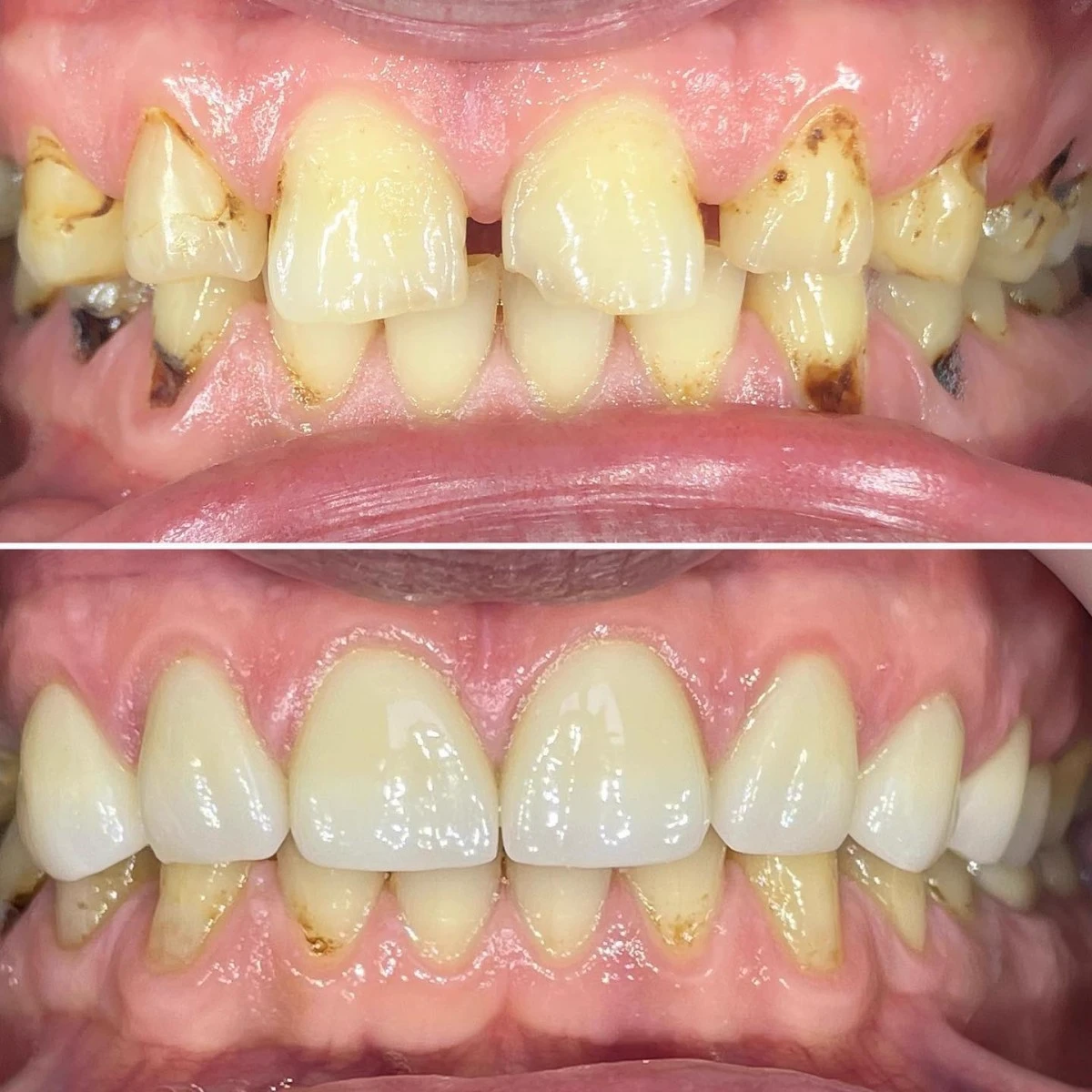
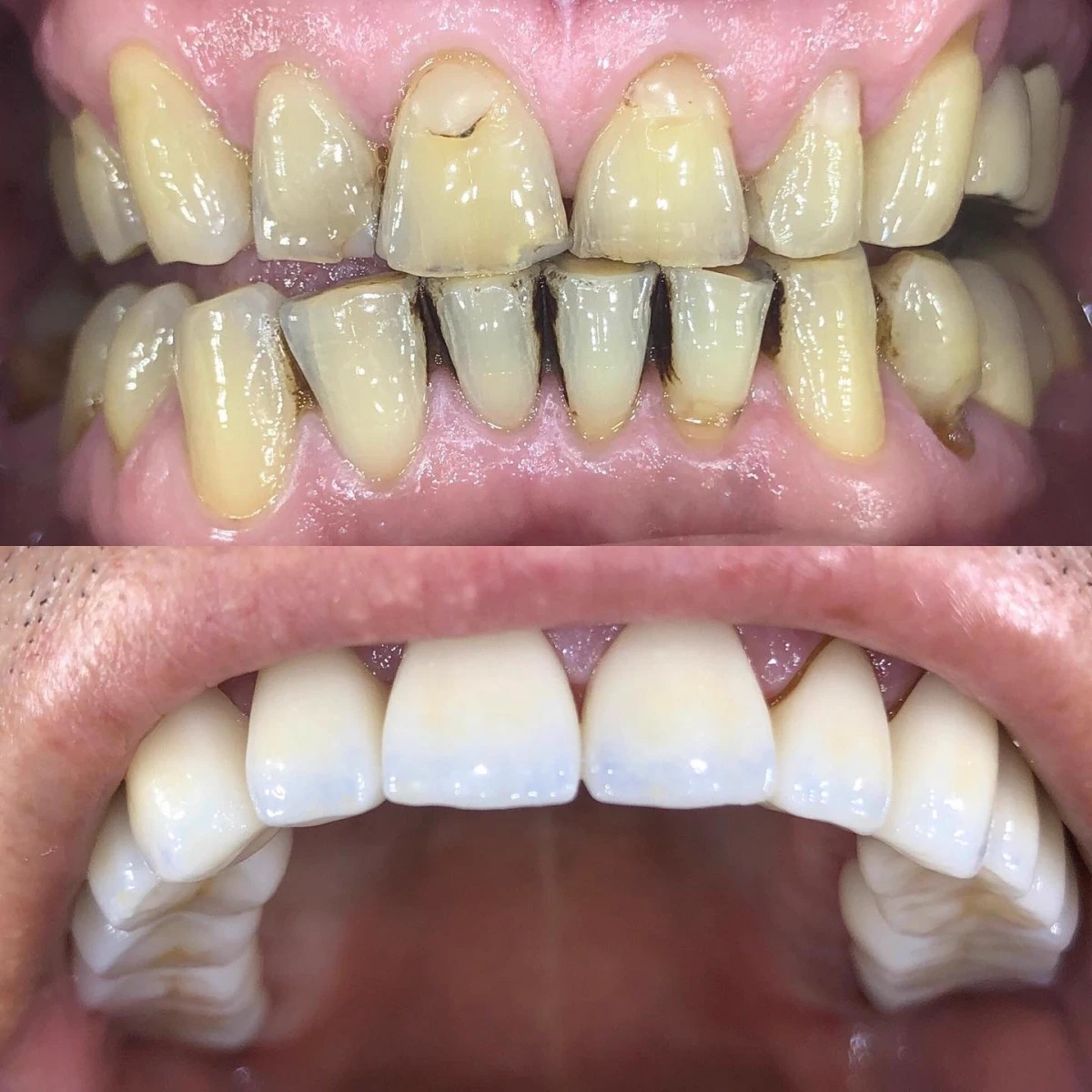
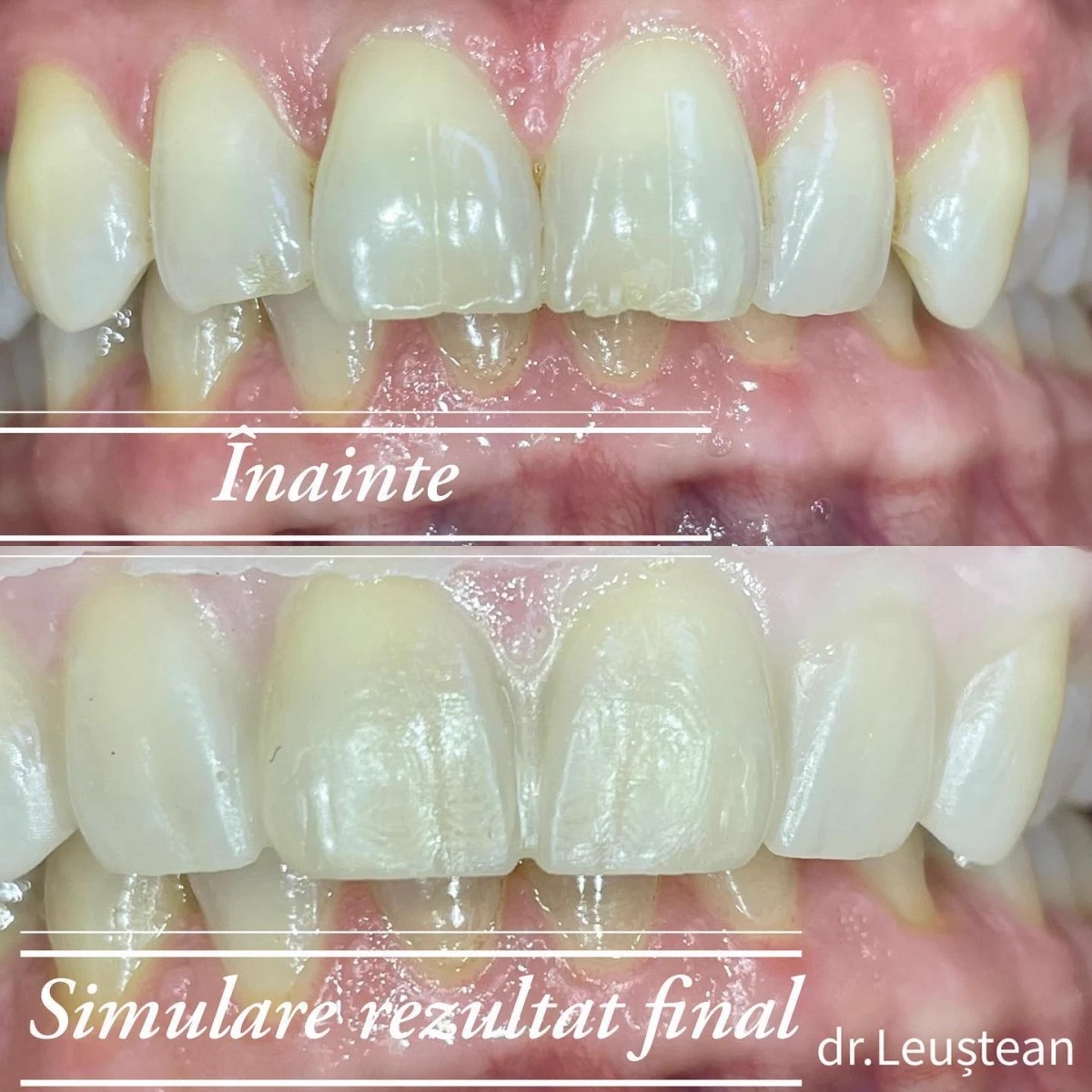
A dental crown is a restoration that covers a tooth with significant damage to its visible part, preserving it both cosmetically and functionally.
A crown can help you keep your tooth for longer. Depending on the material, your oral care and other factors, it can last 20 years or more. A filling placed on a tooth in the same condition will not last as long.
A crown not only improves the look of a damaged tooth, it also extends its life.
-
What do dental crowns do?
- Restore the look of your smile;
- Restore function and proper chewing;
- Preserve correct speech;
- Provide strength for a long time.
- All decayed tissue is removed from the damaged teeth.
- The dentist then carefully cleans and prepares the teeth to make room for the crown.
- This is done carefully and minimally invasively, to keep as much of the natural tooth as possible.
- The technical team receives and processes your digital impression or digital photographs.
- The laboratory also receives information about the colour, shape and size of your teeth, so the final result matches your wishes.
- At our clinic we use digital smile design to plan the shape and size of the crowns according to your facial features.
- Next, the work made by the dental technician is checked and adjusted. When the patient is happy with the result, the crowns are cemented in place.
-
How long do dental crowns last?
There is no fixed time after which a crown must be replaced. It needs changing if the crown or the surrounding tissues (the supporting teeth or the gum) deteriorate.
Poor oral care is the most common cause of damage to the teeth and gums around a crown.
That is why it is essential for the patient to visit the dentist regularly for check-ups and professional cleanings, and for the dentist to check and, if needed, correct the patient's home hygiene habits.
Crowns are mostly damaged by excessive forces: accidents or very strong chewing forces, for example biting on very hard objects, or habits such as teeth grinding (bruxism).
Damage to crowns can be caused either by accidents or by strong chewing forces, such as biting very hard objects, or by habits such as teeth grinding (bruxism).
The dentist should detect and treat bruxism or other habits that wear down the teeth or damage dental restorations.