What are the options when several molars are missing?
I’m missing several molars. What can I do?
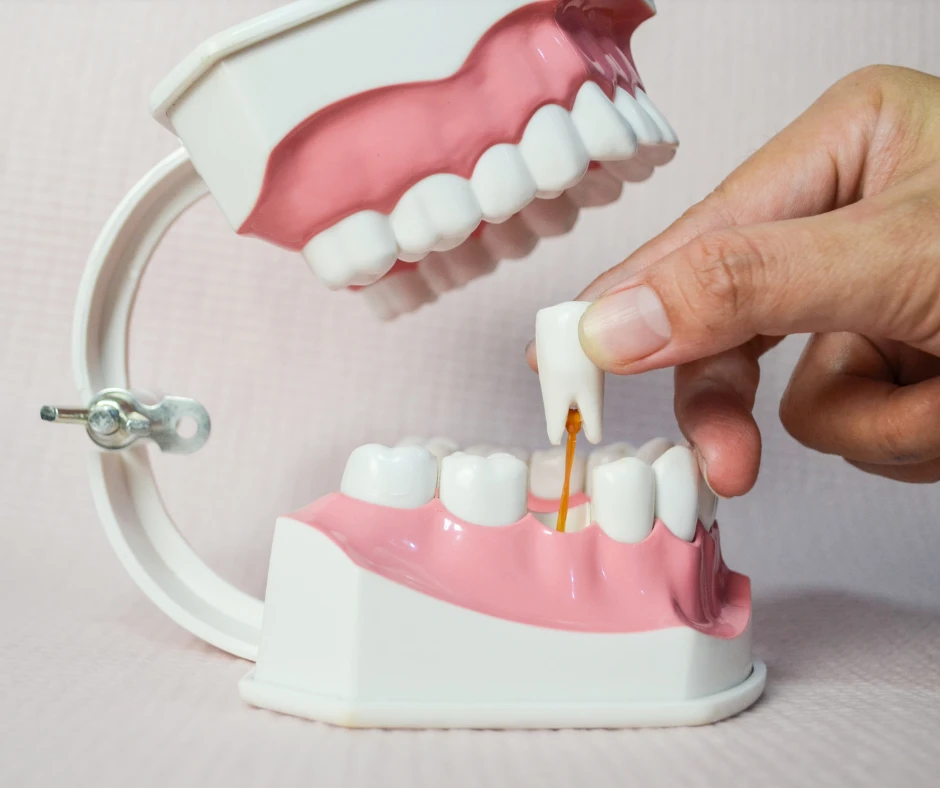
Missing one or more molars is a common problem among patients coming to our dental clinic for the first time. Molars make up the largest part of our dentition, as there are more of them (six in each dental arch). They also have the largest surface area, helping us chew by grinding food. Molars therefore play a fundamental role in the mouth, and if they are lost, the best recommendation is to replace them quickly to avoid later problems and risks.
Caring for your molars
The dentists at our clinic advise patients to pay particular attention to these teeth. Because they sit at the back of the mouth, they are harder to reach when cleaning. Even so, for good oral hygiene it is very important to use interdental brushes or dental floss. These reduce the incidence of decay between the molars and the formation of periodontal pockets.
What happens if you don’t replace missing molars – the risks you face
Perhaps months or even years have passed since you lost several molars and you still haven’t thought about how to replace them. Many people are in the same situation as you, but few realise that going without molars for a long time can seriously damage their health.
Here are the risks you face if you don’t replace missing molars:
- Bone loss
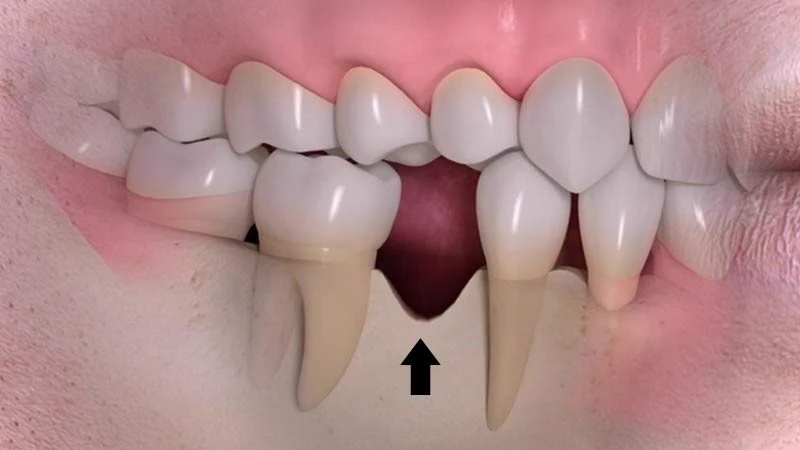
Just as exercise keeps muscles toned, the jawbone stays healthy only if it is stimulated by the presence of teeth and by chewing. When a molar is missing, the area of bone where the tooth used to be no longer receives any stimulation, so it begins to resorb and become thinner and thinner.
- Crooked teeth
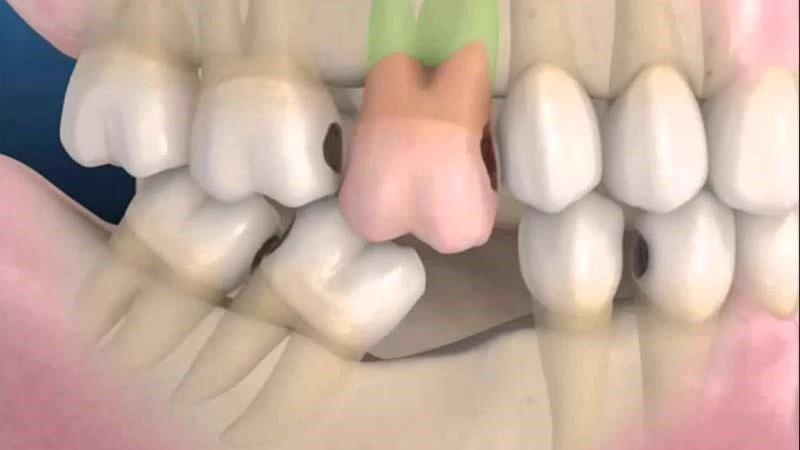
The neighbouring teeth start to move towards the space where the tooth root used to be, because there is nothing left to hold them in place. And that’s not all: it also affects chewing.
- Difficulty chewing
Teeth don’t just need to look good; they also need to break down the food we eat. Depending on where a tooth is missing, you may find it hard to eat some of your favourite foods.
For example, the back teeth (the molars) play a key role when we chew meat or other tough foods. If one is missing, you may not be able to chew properly. Poor chewing can affect digestion and cause reflux. In fact, food that has been only lightly chewed overloads the stomach and prevents it from working as well as it should.
- An older-looking face
Your teeth largely determine the shape and structure of your face. You may be surprised to learn that missing teeth can spoil the appearance of your face. When the bone beneath the gum becomes very thin, the face begins to look older and older. Do you know how older people’s faces look when they take their dentures out? In this case, the effect is exactly the same.
- Losing all your other teeth
If you don’t replace missing teeth quickly, the situation can get worse and worse. The bone recedes not only where your molar once was, but also under the roots of all the neighbouring teeth. A real chain reaction begins, in which your teeth become more and more unstable one by one and eventually fall out, because there is no longer enough bone to support them.
What are the options when several molars are missing?
At some point in life you may lose one or more molars for various reasons, such as trauma or periodontal disease. Replacing missing teeth is very important, both functionally, so that you can chew properly, and aesthetically, so that you can smile without embarrassment.
The dental implant – the best option for replacing lost molars
Today, the least aggressive and most sensible option for replacing lost teeth is to place a dental implant where the molar is missing. The implant acts like the root of the tooth, fusing with the patient’s own jawbone (osseointegration) and thus preventing the bone loss caused by losing teeth.
Dental implantology is undoubtedly the most modern technique for dealing with missing molars. In many cases it is the most effective and definitive solution, especially in terms of stability. It is a surgical procedure, but not at all painful thanks to anaesthesia.
A dental implant is a titanium screw placed in the jawbone that replaces what used to be the tooth root. Once in position, the screw undergoes a process of ‘osseointegration’; in simple terms, it gradually bonds with the surrounding bone.
As already mentioned, the implant is normally made of titanium because of its specific properties, such as biocompatibility and strength.
Dental bridges
Dental bridges (on natural teeth or on implants) are an excellent way to fill gaps when one or more teeth are missing. To restore the space left by a missing tooth, the existing teeth are used to support a ‘bridge’.
Dental bridges are made of ceramic or zirconia-ceramic. Because zirconia works effectively as a substitute for the metal in metal-ceramic crowns, the dental restoration is virtually indistinguishable from a natural tooth.
Dentures
Dentures are a unique medical device, custom-made for each patient, designed to replace lost molars with artificial teeth. A denture consists of two parts: the denture base and the artificial teeth.
To replace lost molars, you can opt for an implant-supported denture, a modern medical option that offers excellent stability when biting. For an implant-supported denture, six dental implants are placed in the upper jaw and four in the lower jaw. These implants are then connected to the denture.
Lasă-ne un comentariu