What are white spots on teeth?
They can appear in both children and adults. They are called demineralisation, and here's what you should do if you notice them:
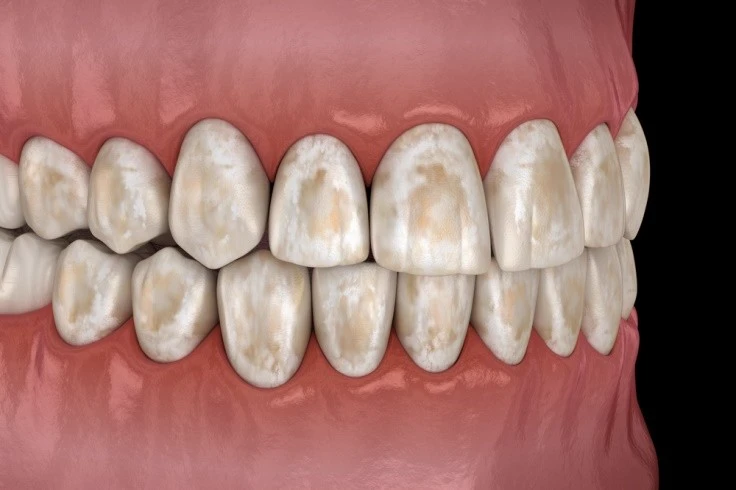
Do you have white spots on your tooth enamel?
Have you noticed chalky white spots on your teeth? It could be tooth demineralisation. Tooth demineralisation is definitely not a problem to underestimate if you want to keep your mouth healthy and, at the same time, have a perfect smile.
The tooth is covered by enamel, made up largely of calcium-based minerals, which protects the underlying dentine: in fact, enamel has no colour – it is translucent – and it is the dentine that gives teeth the white colour we see.
Although its composition makes enamel very hard and resistant, the tooth surface is constantly subject to abrasion and erosion. Sugary foods, saliva and overuse of whitening toothpastes in particular could compromise the integrity of the enamel.
In this article we take a closer look at the subject, explaining what causes demineralisation, how to recognise it and what to do to prevent it.
How to tell if a tooth is demineralised: signs and symptoms
As you would expect, a demineralised tooth is at greater risk of decay, so it is best to act straight away to deal with the problem. That is why it is vital to know how to spot the signs of demineralisation in progress. Fortunately, these symptoms are visible, affecting both the appearance and the function of the tooth, and can therefore be easily identified with a little attention.
A demineralised tooth has one or more of the following characteristics:
- White spots on the teeth;
- Porous enamel;
- Worn enamel;
- Sensitivity to hot or cold substances or certain foods;
- Difficulty biting;
- Cracks and micro-fractures on the tooth surface.
These are the main warning signs that will help you recognise demineralisation.
Tooth demineralisation in adults and children: when the enamel is damaged, decay lies in wait
Demineralisation of tooth enamel, caused by the corrosive action of acidic substances, is the enemy of oral health because it increases the risk of decay and tooth fractures. At the first symptoms of a demineralised tooth, it is therefore advisable to visit your dentist to start the treatment needed.
Of all the components that make up the teeth, one is of fundamental importance: tooth enamel. It is the outer and most visible part, which protects the inside of the tooth and acts as a barrier against external agents. As a result, it is also the visible part of the teeth, the part that gives them their colour, shine and beauty. Dental demineralisation attacks the enamel itself, weakening it and exposing the tooth to very serious dangers such as decay. The process is called demineralisation precisely because it reduces the minerals present in the enamel.
Causes of enamel demineralisation
Having looked at the symptoms of tooth demineralisation, it is worth reviewing its causes too, because knowing them means you can take the right preventive measures. Demineralisation is caused by the erosive action of acidic substances, which attack and weaken the mineral component of the enamel. Internal causes of demineralisation are mainly linked to conditions such as gastro-oesophageal reflux or conditions that cause vomiting. External causes that can demineralise a tooth, on the other hand, stem from a poor diet and incorrect oral hygiene.
When it comes to diet, some foods and drinks are highly acidic, such as fizzy drinks or lemon juice. But we also need to pay particular attention to foods high in sugar, as bacteria convert the sugars in food into acids. The problem can be partly solved even without drastic sacrifices, through careful brushing and regular visits to the dentist, as well as flossing and using a water flosser.
How can tooth demineralisation be prevented?
To prevent tooth demineralisation, you should:
- Cut down on acidic products.
Acidic drinks or foods lower the pH in the mouth, which reduces the teeth's resistance. These include citrus fruits such as limes, lemons and oranges, energy drinks and fizzy drinks, vinegar, wine and others. Very sugary products belong in the same group.
- Use a medium (or soft) toothbrush.
Hard brushes contribute to enamel wear and cause gum recession, which in turn leads to marked sensitivity in that area. Also, don't press too hard when brushing, even when the bristles are soft.
- Don't brush your teeth straight after eating.
Wait at least half an hour for saliva to restore the pH of the mouth.
- Drink enough water.
Staying properly hydrated keeps saliva production steady, which helps to calcify and protect the tooth enamel.
Treatment for demineralisation
The best treatment option is prevention. It is very important to maintain good daily oral hygiene and to go for regular check-ups at the dental clinic. Once white spots appear, there are several treatment options: from the most conservative, such as remineralisation using remineralising pastes, to dental veneers, dental crowns.
There are also other treatment options, such as teeth whitening, which in many cases can mask these lesions by reducing the contrast between the lesion and the healthy enamel, without affecting the tooth tissue.
The dental specialists at Dental Studio Dr. Leuștean will be able to find the right solution for tooth demineralisation: relying on our dentists, who have the most modern technology and the most effective treatments available, is the only way to stop the situation getting worse and to achieve worthwhile results and benefits in solving the problem and improving the appearance of your teeth.
After your visit to the dentist, the dentist will be able to assess the health of your mouth and decide which treatment to carry out and whether to intervene with the technology available, including all the solutions.
Regular visits to our dental clinic will help prevent tooth demineralisation and the problems associated with it.
If the problem has already appeared, our specialist dentists will assess your case. From there, they will guide you step by step to find the best solution
Lasă-ne un comentariu