Why your dentist asks for an X-ray, and what the risks are
Here is what you need to know about dental X-rays:
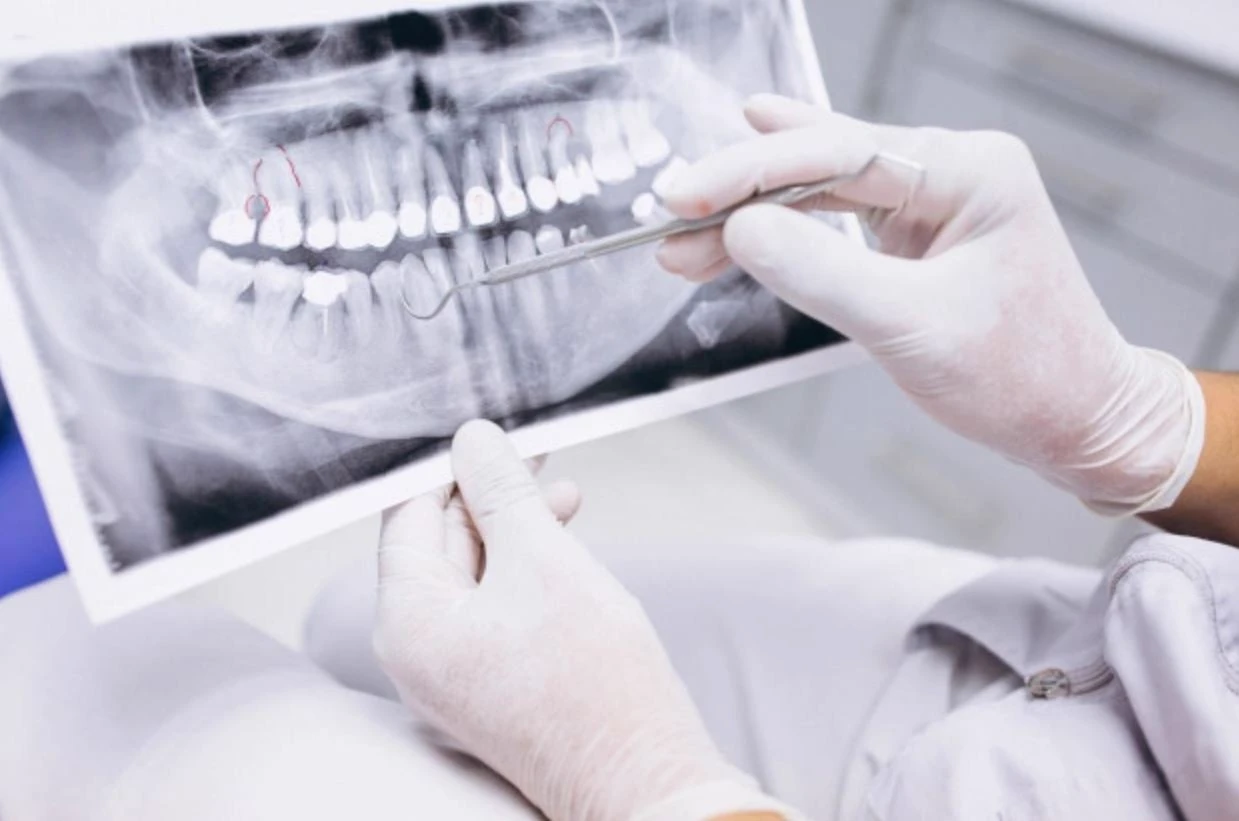
Almost all of us have had to have a dental X-ray at least once in our lives, either for a check-up or so that the dentist can find out whether we have a dental problem. But what risks are we exposed to when we have a dental X-ray, how many types are there, and when should one be taken?
What is a dental X-ray?
A dental X-ray is one of the simplest radiological investigations. As an essential part of dentistry, the dental X-ray is an investigation that gives an overall view of both the teeth and the surrounding structures, such as the upper and lower jawbones, the maxillary sinus and the temporomandibular joints.
However, many people tend to put off having a dental X-ray, or avoid it out of fear or simply because they are not aware of how important this type of procedure is. Below we explain why it is so important to have radiological examinations of the mouth, when they should be carried out, how many types there are, and also what risks they carry.
The importance of dental X-rays – why does your dentist ask for an X-ray?
Like every other part of our body – the bones of the arms, legs or spine – our mouth also needs to be examined thoroughly in order to diagnose dental conditions.
A dental X-ray lets you see what the dentist cannot see with the naked eye during a routine visit: small cavities between teeth, periodontal disease, cysts, abscesses and so on. In addition, there are other aspects that make this procedure such an important investigation:
- It allows an accurate diagnosis of the health of the mouth.
- It helps to examine in detail the bones that make up the mouth, the anatomical structures and the teeth themselves.
- It makes it easier to draw up a correct and effective treatment plan and to choose the most suitable course of treatment.
When should a dental X-ray be taken?
Nowadays people are continually exposed to radiation but, fortunately, a dental X-ray involves a very low dose. Dental X-ray examinations are therefore not dangerous to health – especially as the radiation doses emitted are so small that they can be considered harmless.
However, even though it does not put our health at risk, patients should only have this type of X-ray if it provides more information than can be obtained from a clinical examination. The aim is always for the dentist to be able to offer a correct treatment plan, while weighing up the best value for money and the greatest benefit for the patient.
How many types of dental X-ray are there?
These are the most commonly recommended dental X-rays. Depending on the patient’s needs, the dentist will recommend the most suitable one:
- Panoramic X-ray
This is one of the most widely used today, as it produces an image of the whole mouth, including the teeth and jaws. In most cases, the dentist needs this kind of dental X-ray before the first dental consultation. Once the dentist has analysed the X-ray and spotted any dental problems, they carry out the clinical examination and confirm how far the conditions have progressed.
- Periapical X-ray
This is taken of one tooth, or two or three at most. This X-ray lets the dentist see the crown and root of the whole tooth in detail, at actual size. It is usually indicated during root canal treatment (when the nerve is removed).
- Computed tomography (CT)
This is a three-dimensional analysis of the bone that gives the dentist the most advanced information on the location of possible infections, impacted teeth or the bone dimensions for placing dental implants.
How safe is a dental X-ray? Do you have reason to be afraid?
This is one of the main questions patients ask when they are about to have a dental X-ray: “Is it safe?” Well, these days dental X-rays no longer carry any risks related to the amount of radiation emitted, so they really are safe!
A dental X-ray exposes you to a low level of radiation, so it is not capable of endangering patients’ health. And if we bear in mind that having a dental X-ray is a genuine necessity, we should see it as a benefit of technological progress and trust our dentists when they recommend a particular type of X-ray.
For example, a digital periapical X-ray is equivalent to the daily dose of radiation the body receives while spending time outdoors.
The radiation dose received from a CT scan is equivalent to the radiation received during a flight from Bucharest to Paris.
The risks of dental X-rays
Although dental X-rays involve radiation, exposure levels are so low that they are considered safe for children and adults. In addition, during a dental X-ray a lead apron will be placed over your chest, abdomen and pelvic area to avoid unnecessary radiation exposure to vital organs.
Lasă-ne un comentariu