Sleep apnoea
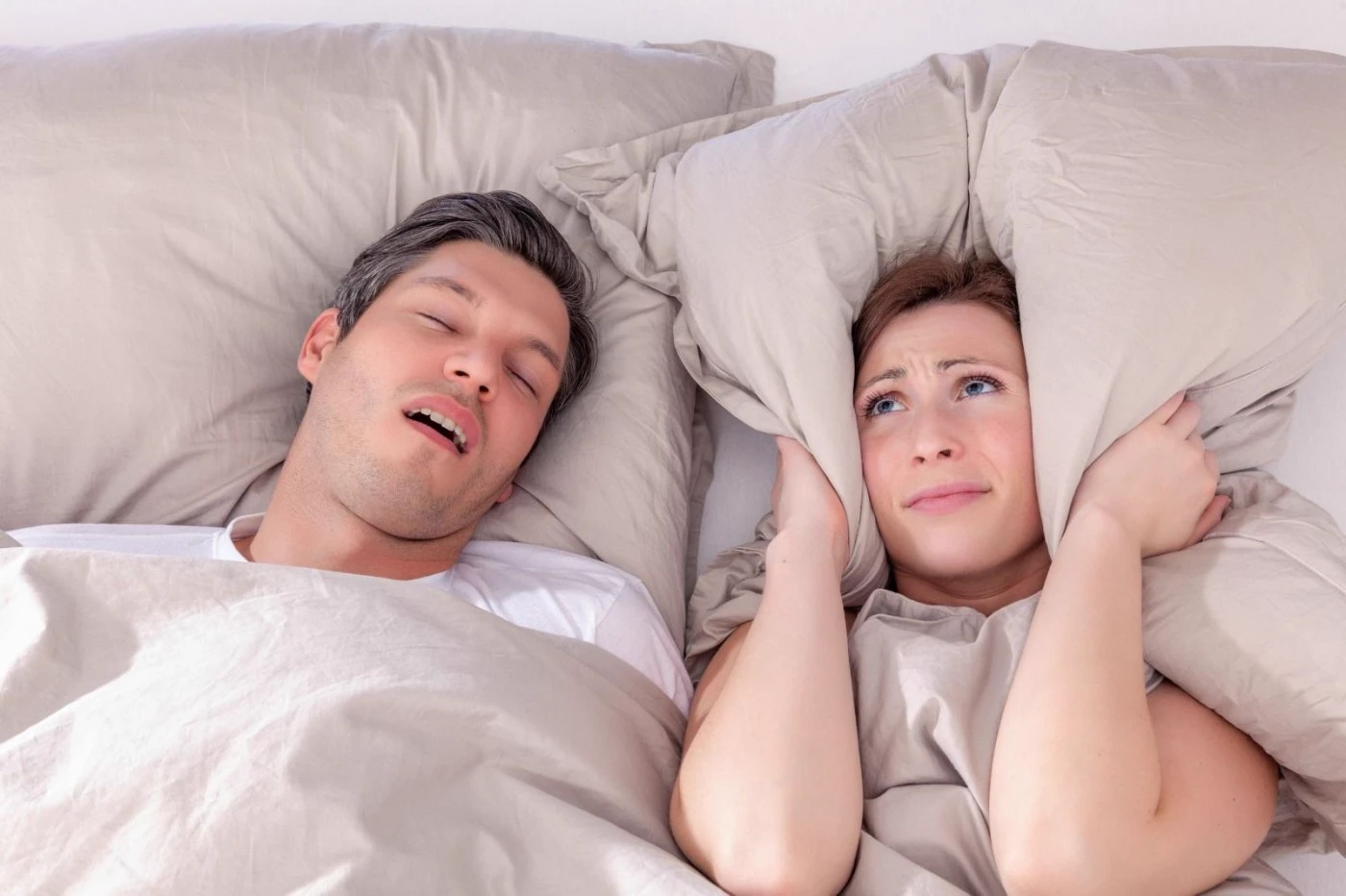
Apnoea is a breathing disorder that occurs when a person stops breathing for a short period during sleep. The condition can have a number of negative effects on health, including an increased risk of heart disease, stroke, high blood pressure and diabetes.
As far as oral health is concerned, sleep apnoea can lead to a number of problems:
- Firstly, patients with sleep apnoea are often prone to bruxism, i.e. grinding their teeth during sleep, which can lead to tooth wear, pain and tooth sensitivity.
In addition, people with sleep apnoea are often more likely to develop tooth decay. Stopping breathing during sleep can reduce saliva flow, which plays an important role in maintaining the optimal pH level in the mouth and protecting the teeth against decay.
Sleep apnoea can also lead to gingivitis: stopping breathing during sleep can reduce saliva flow, which can encourage the growth of bacteria in the mouth and thus lead to gum inflammation and gingivitis.
Morning bad breath. Breathing with your mouth open during sleep causes a dry mouth, which can lead to morning bad breath and other oral health problems.
How are sleep apnoea and oral health linked?
As with other diseases, sleep apnoea and oral health are closely linked and can influence each other. Regular dental check-ups are not only important for dental health, but can also reveal other disorders in the body, including sleep apnoea. Sleep apnoea can often be detected by assessing the patient's dental health.
A common problem associated with sleep apnoea is tooth wear. Jaw tension caused by a constant state of alertness – even if unconscious – can lead to TMJ (temporomandibular joint) disorders and bruxism. These dental problems can be an early sign of sleep apnoea and can be detected by a dentist during a routine examination.
The dentist can also identify other signs of sleep apnoea, such as gum inflammation and tooth loss. People with sleep apnoea often have problems breathing during sleep, which can reduce saliva flow and increase bacteria in the mouth, encouraging the development of gingivitis and tooth decay. A dentist can detect these problems and recommend appropriate treatment to prevent further damage to the teeth and gums.
How can your dentist help if you suffer from sleep apnoea?
An effective solution for treating sleep apnoea is the use of oral appliances (mouthguards). These are custom-made medical devices, made from materials such as calibrated plastic sheets or acrylic, which are worn in the mouth during sleep. They are recommended by the dentist on a case-by-case basis.
These oral appliances work by keeping the jaw and tongue in the correct position so that the airway does not become blocked. They are adjustable and can be customised for each patient, ensuring a perfect fit and maximum comfort.
Benefits of oral appliances for treating sleep apnoea
Here are some of the benefits of using oral appliances to treat sleep apnoea:
Better sleep quality: one of the main problems with sleep apnoea is that it affects sleep quality. By keeping the airway open, oral appliances help prevent apnoea episodes and improve sleep quality.
Painless, non-invasive treatment: oral appliances are a painless, non-invasive treatment option for sleep apnoea. They do not require surgery or medication, which can be an advantage for people looking for a simple, effective solution.
Custom-made for a perfect fit: oral appliances are made from an impression of the patient's teeth and are personalised. This ensures a comfortable, secure fit that will not disturb the patient's sleep or injure the teeth or gums.
Portability: Oral appliances are easy to carry and can be worn wherever the patient wants to sleep. This can be useful for people who travel frequently and don't want to deal with the sleep problems caused by sleep apnoea.
Reusable: oral appliances can be used for several years, provided they are kept hygienic and cleaned regularly.
In addition, these devices are much more comfortable than other treatment options such as CPAP (continuous positive airway pressure) masks. However, it is important to bear in mind that oral appliances are not suitable for all patients with sleep apnoea. In more severe cases of sleep apnoea, surgery or CPAP masks may be needed to treat the condition.
At Dental Studio Dr. Leuștean, we are here to help you look after your oral health and much more!
If sleep apnoea is giving you no peace or you are experiencing unwanted symptoms, we recommend seeking help as soon as possible. Our team of experts will offer you personalised consultations and treatments to help you regain your health and comfort.
Lasă-ne un comentariu