Implant or removable denture? Which would you choose?
Find out the pros and cons and make an informed choice!
If you have lost all your teeth, you are no doubt looking for a way to replace them as soon as possible. And rightly so: missing teeth cause a range of aesthetic and functional problems. Going without teeth for a long time leads to other kinds of difficulties that have a negative impact on your life.
These are the main problems associated with missing teeth:
- Loss of chewing function.
- Problems with speech and pronunciation.
- Loss of jawbone structure.
- Unbalanced oral structure.
- Changes to the structure of the jaw and to facial features.
- Digestive problems, because you cannot chew your food properly.
But now you have to make a choice: replace your teeth with dental implants or with a removable denture. Below, we look at the advantages and disadvantages of both options:
Dental implants: advantages and disadvantages
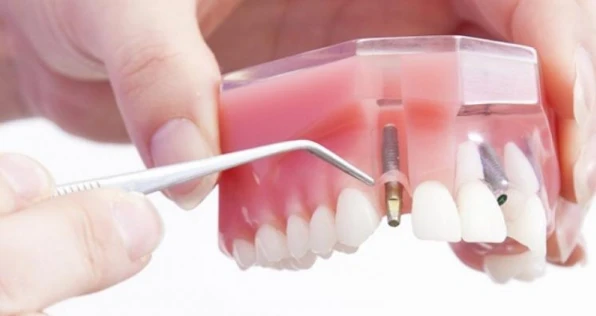
Dental implants are a dental technique that allows one or more natural teeth to be replaced with artificial teeth that closely resemble natural teeth, both functionally and aesthetically. A dental implant consists of a titanium screw which is surgically placed into the bone, replacing the root of the missing tooth.
We have seen what a dental implant is and how it is made up, but what are the advantages of opting for oral implantology?
The benefits of dental implants include the following:
- Preventing bone loss: when a tooth is missing, bone structure is lost too, especially if it affects the upper jaw.
- Restoring chewing function: by replacing missing teeth with dental implants, natural chewing is restored.
- Keeping speech natural: if a tooth is missing – and even more so if several are missing – some words can be difficult to pronounce. Dental implants can solve this problem.
- No special maintenance: a dental implant is just like a natural tooth, so oral hygiene is the same as for natural teeth.
- Support for nearby natural teeth: if a tooth is missing, the adjacent teeth tend to move into the gaps, causing imbalances. With dental implants, the teeth stay stable.
- Preventing gum disease: food debris can collect in the gaps left by lost teeth and encourage gum disease. Dental implants can eliminate this problem.
- Long lifespan: if they are properly cared for, with regular professional cleaning sessions and routine dental check-ups, dental implants can last for decades without causing problems.
What are the disadvantages of dental implants?
Like any branch of dentistry, dental implantology has advantages as well as disadvantages which, though few, should not be underestimated. It is important for the dentist to explain them to the patient when preparing for surgery.
One of the main disadvantages of dental implants is the patient’s fear of this type of procedure. However, this can be overcome thanks to modern dental techniques and anaesthesia, which reduces discomfort and relieves pain. Beyond this disadvantage, which can be overcome, there are also some contraindications to placing implants. These are:
- Oral diseases, such as periodontitis, which must be treated before going ahead with placing one or more implants.
- Smoking. In patients considered heavy smokers, it is necessary to assess carefully their genuine willingness to quit or to cut down considerably on tobacco, because otherwise they risk undermining, if not preventing altogether, the process of osseointegration.
Removable dentures: advantages and disadvantages
A removable denture is a detachable appliance that replaces lost teeth across an entire dental arch. It is called removable because the patient can take it out at night to clean it.
The benefits of removable dentures include the following:
- The main advantage of a complete denture is the price. Compared with dental implants, dentures are in fact cheaper. So they could be a good solution if you do not want to, or cannot, spend as much
On the other hand, there are at least 4 disadvantages:
- Dentures are unstable.
- Missing teeth cause the bone to become thinner and thinner over time.
- When the bone is very worn down, dentures start to become unstable. At this point you will no longer be able to eat properly, because your teeth will not have much strength to chew food.
- Dentures can come out of your mouth. Imagine you are at an important dinner and, while you are talking, your denture slips out of your mouth. Embarrassing, isn’t it?
- Sometimes they are painful. You may not know this, but when dentures are very unstable they can cause minor sores and gum pain. Some people find it hard to get used to them: the pain can become so unbearable that it is a major source of stress.
- They need to be relined. As we said, when you lose a lot of bone, your dentures become unstable. When there are large gaps between the gum and the denture, it needs to be refitted to the new shape of your mouth to make it more stable.
Given the advantages and disadvantages of these two solutions for replacing lost teeth, which would you choose? Do you need this type of treatment? Our team of experts in implantology and prosthodontics will always offer you alternatives to restore the function and appearance of your mouth. Book a consultation right now!
Bucuresti, Romania
09:00 - 21:00
Lasă-ne un comentariu