How, when and why should you have your wisdom teeth removed?
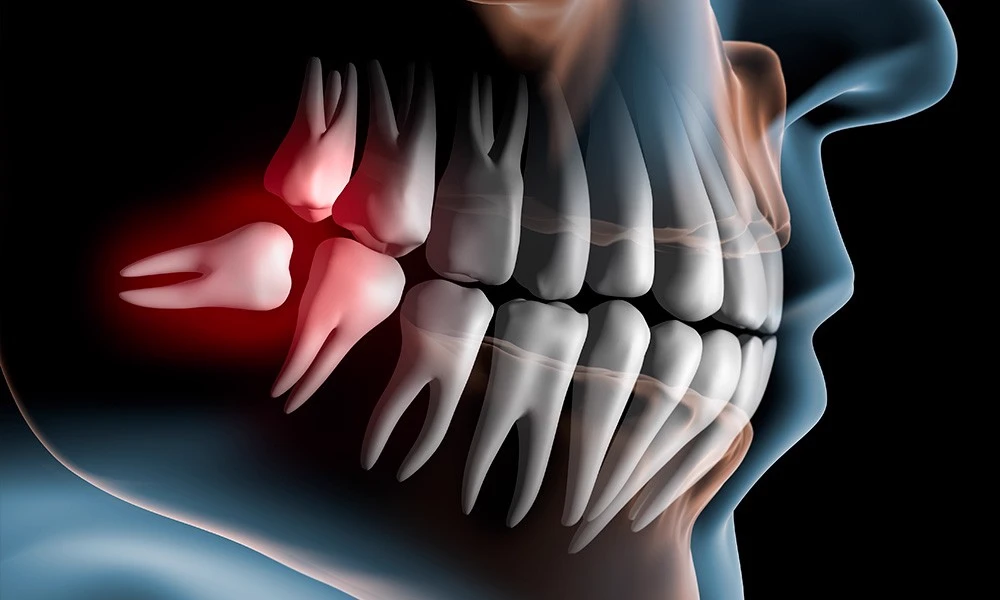
One of the most dreaded topics when it comes to teeth is surely wisdom tooth extraction. Wisdom teeth represent an important step in the evolution of human teeth. In fact, they are the last teeth to come through: they are a legacy of the ancient human need to chew uncooked food and, therefore, to use the jaws. Today, these molars serve no purpose in chewing or in the aesthetics of the smile.
What are wisdom teeth and what is their function?
Wisdom teeth are so called because they erupt between the ages of 18 and 30. Everyone knows that the natural evolution of the species, through its selective process, has undergone changes aimed at improving and maintaining quality of life. Wisdom teeth had a very important function for primitive humans: they were used to chew tough food. Many factors have changed over the centuries: humans no longer hunt and now eat an increasingly varied diet, so wisdom teeth are no longer useful or functional for chewing. This is the main reason why they may be missing in younger generations.
How many wisdom teeth do we have?
There are usually four wisdom teeth, two upper and two lower.
Reasons why wisdom teeth need to be removed
Here are the cases in which wisdom tooth extraction is unavoidable:
- when wisdom teeth have not fully erupted, which can lead to abscesses, gingivitis, inflammation, tooth decay or other complications;
- when wisdom teeth have erupted in abnormal positions and injure the inside of the cheeks or the tongue;
- when wisdom teeth erupt partially and part of the crown stays under the gum: in these cases abscesses or inflammation can develop due to inadequate cleaning and decay that also affects the neighbouring molar;
- when wisdom teeth are responsible for periodontal pockets and therefore contribute to bone resorption;
- when they are considered responsible for crowding of the teeth;
- when they are considered responsible for dental disease.
Wisdom tooth extraction
Removing wisdom teeth can be more or less complex, depending on the patient's situation. If the tooth has not yet erupted, an incision in the gum will be needed. In general, upper wisdom teeth are the easiest to extract, and the dentist may proceed as with an ordinary molar. To remove lower wisdom teeth, on the other hand, it may be necessary to section the tooth into small pieces.
At Dental Studio Dr. Leuștean we have 3D imaging that helps us identify the exact position of the tooth in the bone, so wisdom tooth extraction can be carried out optimally.
Is it dangerous to have wisdom teeth removed?
Absolutely not. Placing yourself in expert hands is essential, especially if an X-ray has shown that the teeth are impacted or partially impacted. The technique for removing wisdom teeth is the same as for all other extractions, but clearly the dentist needs to take greater care with impacted or partially impacted teeth, as these areas are close to nerves.
What happens after wisdom tooth extraction?
Technological progress has made the post-operative period generally calm and safe. However, everyone experiences pain differently. This obviously also applies to wisdom teeth, which can cause discomfort in some people. Nevertheless, pain and swelling can be controlled with the right medication, prescribed by the dentist before and after the extraction.
Feeling pain around your wisdom tooth?
We invite you to a consultation so we can see exactly what the best course of action is. Even if you don't feel any pain yet, there is a chance that a condition has developed or is developing. That is why it is good to know the state of your wisdom teeth and whether or not you may develop complications in the future. We are here for you whenever you want to find out more about your oral health.
If you have any questions, you can contact us by email at Arată email-ul or by phone on 0723.166.180.
Together we will assess your case and follow you from your first visit until your oral problems are resolved.
Don't put off booking an appointment!
Lasă-ne un comentariu