Microscope-assisted root canal treatment: what it is and how it can save damaged teeth
However careful we are with our oral hygiene, our teeth can suffer from a variety of problems, from decay and fractures to infections and root damage. In the past, these dental problems would often have meant extracting the tooth, but today there are more advanced and effective solutions. One of these is microscope-assisted root canal treatment.
Although this treatment may sound intimidating, it is in fact a common and minimally invasive procedure
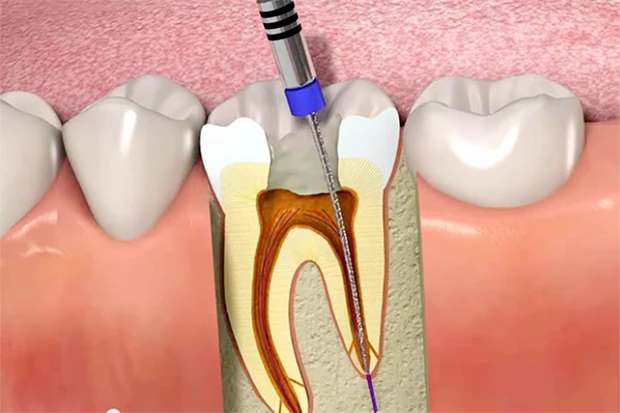
Essentially, microscope-assisted root canal treatment involves removing the nerve – more precisely, cleaning the root canal, removing infected or damaged tissue and filling the canal with a special material to prevent reinfection.
What is really special about this root canal treatment, though, is that at Dental Studio Dr. Leuștean it is carried out using a specialised microscope
This microscope gives the dentist an extremely detailed view of the root canal, allowing them to locate and remove any damaged or infected tissue precisely and efficiently.
In this article we'll explore what microscope-assisted root canal treatment is, how it is carried out and how it can help save damaged teeth and prevent extractions. We'll also discuss when you should consider microscope-assisted root canal treatment compared with other options:
What is microscope-assisted root canal treatment?
Endodontic treatment, also known as “root canal treatment”, is a common dental procedure that focuses on treating the inside of the tooth, including the pulp chamber, the canal system and the nerves. Its main aim is to eliminate existing infection and protect the tooth from possible future infection, as well as to allow retreatment if needed.
The endodontic microscope used in these procedures gives the dentist an extremely detailed and precise view of the root canal, allowing treatment to be carried out with greater accuracy and efficiency than would be possible with traditional instruments and techniques.
The traditional root canal procedure, in which the dentist examines the canal by eye, has a success rate of around 50-60%. By contrast, using an endodontic microscope can significantly improve the success rate to over 90%, reducing the risks associated with both the non-surgical and the surgical stages of treatment.
Advantages of microscope-assisted root canal treatment over traditional procedures
Compared with traditional root canal procedures, microscope-assisted root canal treatment has a number of advantages, including:
- Greater precision: The microscope provides a magnified view of the inside of the tooth, allowing the endodontist to see the anatomical details of the root canals more clearly and to identify problems that might be missed during a traditional procedure.
- Better results: Thanks to improved visibility, the endodontist can clean the root canals more precisely and thoroughly, making sure that all affected or infected tissue is removed. This can lead to a higher success rate for root canal treatment.
Lower chance of recurrence: Microscope-assisted root canal treatment can reduce the risk of infection or inflammation recurring in the tooth, as it can remove more precisely any infected or damaged tissue that might be missed during traditional treatment.
Patient comfort: Because the endodontist can see the inside of the tooth better and carry out the procedure more precisely, microscope-assisted root canal treatment can be less invasive and less painful than traditional root canal procedures.
Shorter treatment time: Thanks to improved precision, microscope-assisted root canal treatment can be quicker than traditional root canal procedures.
When is microscope-assisted root canal treatment needed?
Microscope-assisted root canal treatment is recommended when the inside of the tooth (called the dental pulp) is infected or inflamed. This can be caused by a number of problems, such as:
- Tooth decay: When decay is not treated in time, it can cause inflammation or infection.
- Dental trauma: A hard knock to a tooth can damage the dental pulp and lead to infection or inflammation.
- A deteriorating old filling: An old filling or other dental work can deteriorate over time and allow bacteria to get inside the tooth.
- Exposed root: An exposed root can be caused by gum recession or other gum problems and can allow bacteria to get inside the tooth.
Symptoms that may indicate you need microscope-assisted root canal treatment include:
- Persistent pain: The pain may be constant or may come on when pressure is applied to the tooth, for example when chewing food.
- Sensitivity to hot and cold: The tooth may be sensitive to extreme temperatures or to cold or hot food and drinks.
- Discolouration or darkening of the tooth
- Facial swelling: The infection can cause swelling of the face around the affected tooth.
- Pain returning in a previously treated tooth
So microscope-assisted root canal treatment is a modern, effective option for treating damaged and infected teeth. Using a microscope during the procedure can help the endodontist provide more precise and more comfortable treatment for the patient.
If you need root canal treatment or suspect you have a problem with your teeth, we recommend booking a consultation at Dental Studio Dr. Leuștean, where you'll benefit from high-quality dental care provided by a specialist experienced in using the endodontic microscope. Don't put off treatment – contact us today for a professional assessment of your dental health!
Lasă-ne un comentariu