How children should understand dentistry: habits, rules and skills
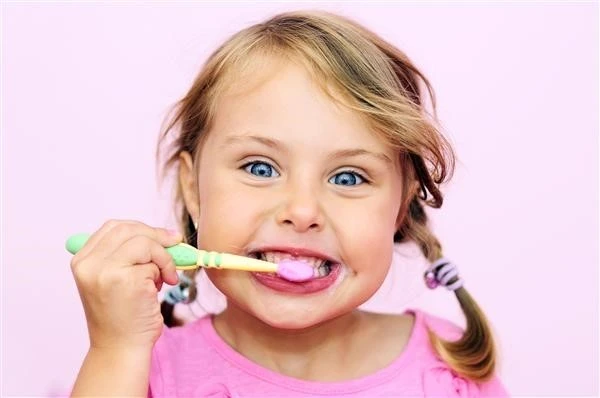
When it comes to children’s oral health, early communication between parents and children about practising excellent oral hygiene is what matters most. Dental care in childhood gives children healthy teeth, free from decay and dental disease.
How should children understand dentistry?
Young patients often associate going to the dentist with fear. A new and unfamiliar situation can unsettle children and lead to fear or even refusal to go to an appointment. Parents often find themselves asking, ‘How should I behave so that my child is happy to go to the dentist?’ In some cases, these challenges eventually lead parents to stop taking their children to the dentist altogether.
Regular check-ups and treatment are essential, especially for the youngest patients! After all, childhood is when the foundations of long-term dental health are laid. So don’t hesitate to visit a friendly, competent dentist with plenty of experience in treating children. That is exactly what we can offer at our clinic: we are wonderfully good at easing the fears and reservations of our young patients and, in an atmosphere that is as friendly as it is interesting, we turn a visit to the dentist into a little adventure.
Why is it important for children to understand what dentistry involves from an early age?
The mouth is at the centre of a child’s structural, functional and cognitive development.
It develops key primary functions such as chewing, swallowing and speech and, in sensory terms, it is the main interface with the outside world.
Starting prevention while the child is still young makes it possible to guide the morphological, functional and sensory development of the mouth, contributing to the child’s healthy overall growth.
That is why it is so important to monitor children from an early age and to support them as they grow by applying rules and habits that prevent tooth decay and oral disease.
Good oral hygiene starts in childhood: healthy habits for healthy teeth:
Good oral hygiene in children depends on one fundamental watchword: prevention! Of course, the first step towards your little one having healthy teeth is for them to look after their teeth before problems appear. To that end, here are some habits we recommend you put into practice:
- Communicating with your child is key. Talk to them about why it matters to keep their teeth and gums healthy.
- Another habit that helps protect your child’s teeth and gums is eating a healthy diet. As a general precaution, parents should teach children to stay away from foods high in sugar and starch.
- Use positive language with your children. Always phrase things positively, focusing on what the child should do rather than what they shouldn’t. Avoid expressions that might frighten them. A child knows a dental drill, for example, as a device that makes a noise – it is natural for them to be afraid of it and not want it. Upsetting words (including syringe, anaesthetic, pain and so on) should be avoided and replaced with creative, child-friendly words. Simply swap words that cause panic for creative ones, and your child will come to love dentistry. Call the drill ‘the magic tool’, for example. Use your creativity as a parent!
- Create a consistent tooth-care routine together. Make oral hygiene a daily habit: always brush your teeth together, at the same time, (at least) twice a day.
- You can involve their favourite toys in toothbrushing. For example, invite your children to brush their teddy’s or doll’s teeth too, and teach them to do it properly.
- Turn to books. Before your little one starts brushing their own teeth, go to the library together to browse books about oral hygiene: there are many books that teach children the process through funny, entertaining stories. Others warn of the dangers of poor oral hygiene, making clear to children how important this daily habit is.
- Always let children choose their toothbrush and, above all, their toothpaste, as long as it is a product suitable for their age. There are many kinds, and if the toothpaste you choose ‘tastes horrible’ to them, brushing will obviously turn into a little drama every time.
- Explain to children what tooth decay and plaque are, so that they feel like heroes defeating the ‘bad germs’.
- Create a ‘grown-up’ space for them by the sink or on the bathroom shelf dedicated to oral hygiene.
- Make a calendar on which children can mark the days they brushed their teeth. If they have brushed twice a day for a month, they can get a reward at the end of the month.
- Make regular visits to the paediatric dentist a fun adventure, offering some kind of reward to encourage your child to go back to the dentist.
At Dental Studio Dr. Leustean we welcome our young patients with open arms!
When you visit us with your little ones, our priority is getting to know each other. We will show your child around our practice in a friendly, approachable way, introduce them to the team and explain what the instruments we use are for.
In this way, going to the dentist quickly becomes something normal. Because a pleasant environment plays a decisive role in reducing and eliminating fears and insecurities, we give your child plenty of time.
Depending on the age of the young patient, we can usually carry out an initial examination of the mouth and then tell you whether everything is in order or whether further treatment is needed. We often give children information and advice on proper dental care during this stage of the examination. If necessary, preventive treatments can also be carried out at that time. It is important to us that your little ones feel truly comfortable at our clinic.
Lasă-ne un comentariu